
Eating a healthy diet does not have to be complicated. A wide variety of whole and minimally processed foods can provide the vitamins, minerals, protein, healthy fats, fiber, and other nutrients your body needs.
There is no single “healthiest” food. Instead, the best approach is to eat a diverse range of nutrient-rich foods and balance your meals according to your individual needs.
Here is a list of 100 nutritious foods worth including in a balanced diet.
1. Leafy Greens and Vegetables
- Spinach — Rich in folate, vitamin K, carotenoids, and other nutrients.
- Kale — Provides vitamins C and K, carotenoids, and fiber.
- Collard greens — A good source of vitamins K, A, and C.
- Swiss chard — Contains magnesium, potassium, and vitamin K.
- Arugula — A nutrient-dense leafy green with vitamin K and folate.
- Broccoli — Provides fiber, vitamin C, vitamin K, and folate.
- Cauliflower — A versatile source of fiber and vitamin C.
- Brussels sprouts — Rich in fiber, vitamin C, and vitamin K.
- Cabbage — Affordable, versatile, and rich in vitamin C and fiber.
- Carrots — Excellent source of beta-carotene, which the body can convert to vitamin A.
- Sweet potatoes — Provide complex carbohydrates, fiber, potassium, and beta-carotene.
- Pumpkin — Rich in carotenoids and potassium.
- Tomatoes — Provide vitamin C, potassium, and the antioxidant lycopene.
- Bell peppers — Particularly rich in vitamin C and carotenoids.
- Beets — Provide folate, potassium, and naturally occurring nitrates.
- Okra — A good source of fiber, folate, and vitamin C.
- Green beans — Provide fiber, folate, and vitamin C.
- Asparagus — Contains folate, fiber, and vitamins A, C, and K.
- Mushrooms — Provide B vitamins and minerals; some varieties contain vitamin D when exposed to UV light.
- Onions — Provide vitamin C and beneficial plant compounds.
2. Fruits
- Blueberries — Rich in anthocyanins, vitamin C, and fiber.
- Strawberries — High in vitamin C and fiber.
- Raspberries — Particularly high in dietary fiber.
- Blackberries — Provide fiber, vitamin C, and polyphenols.
- Apples — Convenient sources of fiber and plant compounds.
- Oranges — Excellent source of vitamin C and a source of folate.
- Grapefruit — Provides vitamin C and other plant compounds.
- Pawpaw (papaya) — Rich in vitamin C, carotenoids, and folate.
- Mangoes — Provide vitamins C and A and several carotenoids.
- Pineapple — Contains vitamin C, manganese, and bromelain.
- Guava — Exceptionally rich in vitamin C and also provides fiber.
- Watermelon — Hydrating and a source of lycopene and vitamins A and C.
- Avocado — Rich in monounsaturated fat, fiber, potassium, and folate.
- Bananas — Convenient sources of carbohydrates, potassium, and vitamin B6.
- Pears — Provide fiber, particularly when eaten with the skin.
- Kiwi — High in vitamin C and fiber.
- Pomegranate — Contains polyphenols and vitamin C.
- Grapes — Provide water, vitamin K, and various polyphenols.
- Passion fruit — Rich in fiber and vitamin C.
- Dates — Nutrient-dense dried fruit providing fiber, potassium, and natural carbohydrates.
3. Beans, Peas, and Other Legumes
- Lentils — Excellent sources of plant protein, fiber, iron, and folate.
- Chickpeas — Provide protein, fiber, folate, iron, and magnesium.
- Black beans — Rich in plant protein, fiber, and minerals.
- Kidney beans — Provide protein, fiber, folate, and iron.
- Pinto beans — Nutrient-dense and rich in fiber and plant protein.
- Black-eyed peas — Provide protein, fiber, folate, and potassium.
- Soybeans — Complete plant protein sources containing all essential amino acids.
- Green peas — Provide protein, fiber, vitamin C, and vitamin K.
- Edamame — Young soybeans containing protein, fiber, and folate.
- Lima beans — Provide fiber, plant protein, potassium, and folate.
4. Whole Grains and High-Fiber Foods
- Oats — Rich in soluble fiber, including beta-glucan.
- Brown rice — A whole grain providing fiber and several minerals.
- Quinoa — Provides protein, fiber, magnesium, and other minerals.
- Millet — A naturally gluten-free whole grain containing magnesium and other nutrients.
- Sorghum — A whole grain providing fiber, minerals, and plant compounds.
- Barley — Particularly rich in beta-glucan and other types of fiber.
- Whole-grain maize (corn) — Provides carbohydrates, fiber, and carotenoids.
- Whole-wheat bread — Provides more fiber and nutrients than refined white bread.
- Buckwheat — A nutrient-rich seed commonly prepared like a grain.
- Amaranth — Provides protein, fiber, magnesium, iron, and other minerals.
5. Nuts and Seeds
- Almonds — Rich in vitamin E, magnesium, fiber, and unsaturated fats.
- Walnuts — Provide omega-3 fatty acid ALA and other beneficial plant compounds.
- Pistachios — Provide protein, fiber, potassium, and healthy fats.
- Cashews — Good sources of copper, magnesium, and unsaturated fats.
- Peanuts — Provide protein, fiber, niacin, and healthy fats.
- Brazil nuts — Extremely rich in selenium, so small portions are sufficient.
- Hazelnuts — Provide vitamin E, magnesium, and healthy fats.
- Chia seeds — Rich in fiber, ALA omega-3 fats, and minerals.
- Flaxseeds — Provide ALA omega-3 fats, fiber, and lignans.
- Pumpkin seeds — Rich in magnesium, zinc, protein, and healthy fats.
- Sunflower seeds — Provide vitamin E, magnesium, and healthy fats.
- Sesame seeds — Provide calcium, magnesium, copper, and healthy fats.
6. Fish and Seafood
- Salmon — Rich in high-quality protein and long-chain omega-3 fatty acids.
- Sardines — Provide omega-3 fats, vitamin D, calcium, and protein.
- Mackerel — An oily fish rich in omega-3 fatty acids and vitamin B12.
- Herring — Provides omega-3 fats, vitamin D, and vitamin B12.
- Trout — A nutritious source of protein and omega-3 fatty acids.
- Tuna — Provides high-quality protein and several vitamins and minerals.
- Anchovies — Small oily fish providing omega-3 fats, calcium, and protein.
- Oysters — Particularly rich in zinc and vitamin B12.
- Shrimp — High in protein and provides selenium, iodine, and vitamin B12.
7. Eggs, Meat, and Dairy
- Eggs — Provide high-quality protein, choline, vitamin B12, and other nutrients.
- Plain Greek yogurt — Rich in protein and calcium; varieties with live cultures can provide beneficial bacteria.
- Plain natural yogurt — Provides protein, calcium, and potentially beneficial live cultures.
- Milk — Provides protein, calcium, vitamin B12, and other nutrients; fortified varieties may provide vitamin D.
- Cottage cheese — High in protein and a source of calcium.
- Chicken — Provides high-quality protein and several B vitamins.
- Turkey — A lean source of protein and B vitamins.
- Lean beef — Provides protein, iron, zinc, and vitamin B12.
- Liver — Extremely nutrient-dense, particularly in vitamin A, B12, iron, and copper. Because some nutrients are present in very high amounts, it is best eaten in moderation.
8. Fermented and Other Nutrient-Rich Foods
- Kimchi — Fermented vegetables that can contribute beneficial microorganisms to the diet.
- Sauerkraut — Fermented cabbage that can provide beneficial bacteria when unpasteurized.
- Kefir — A fermented dairy drink containing protein and calcium and often live cultures.
- Tempeh — Fermented soybeans providing plant protein and minerals.
- Tofu — A versatile source of plant protein, with calcium-rich varieties available.
- Extra-virgin olive oil — Rich in monounsaturated fat and plant compounds.
- Garlic — Contains sulfur-containing compounds and can add flavor without much sodium.
- Ginger — Contains bioactive compounds such as gingerols and can be used to flavor meals.
- Green tea — Provides polyphenols and can be consumed without added sugar.
- Dark chocolate with a high cocoa content — Provides cocoa flavanols and minerals, but is also calorie-dense, so portions matter.
How to Get the Most From These Foods
Eating healthy is less about finding a single “superfood” and more about building a balanced eating pattern.
- Eat a variety of vegetables and fruits throughout the week.
- Choose whole grains more often than refined grains.
- Include beans, lentils, nuts, and seeds regularly.
- Eat fish, particularly oily fish, as part of a balanced diet.
- Choose mostly unsaturated fats, such as those found in nuts, seeds, avocado, and olive oil.
- Include adequate protein from both plant and animal sources according to your dietary preferences.
- Limit highly processed foods that are high in added sugars, sodium, or unhealthy fats.
- Drink plenty of water and limit sugary beverages.
- Pay attention to portion sizes, since even nutritious foods can contribute excessive calories when eaten in very large quantities.
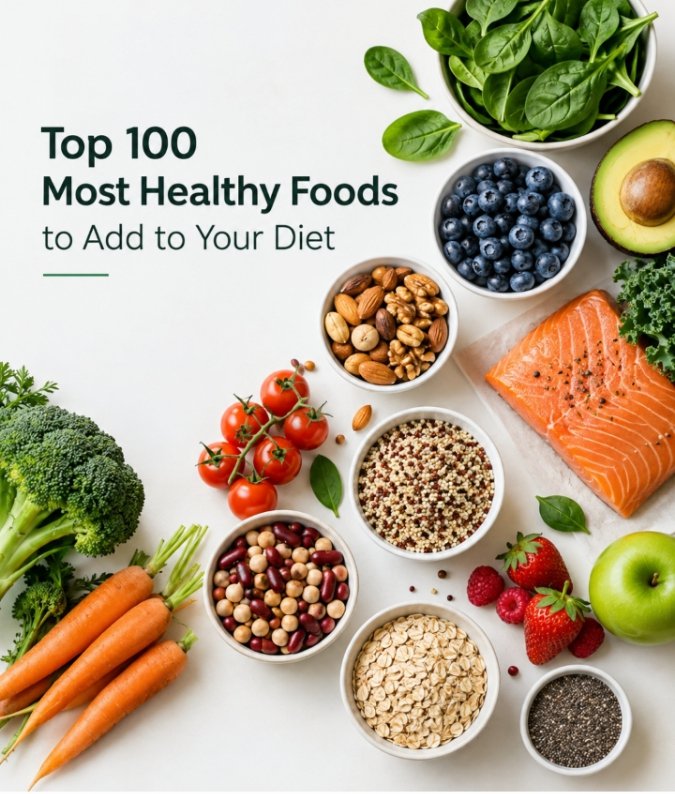
The healthiest diet is one that is varied, balanced, nutrient-dense, and sustainable for you. The 100 foods above offer a wide range of nutrients, but you do not need to eat all of them.
Focus on regularly including different vegetables, fruits, whole grains, legumes, nuts and seeds, protein-rich foods, and healthy sources of fat. Variety is one of the simplest ways to improve the nutritional quality of your diet while keeping meals interesting and enjoyable.

Leave a Reply